 By Streameast Xyz
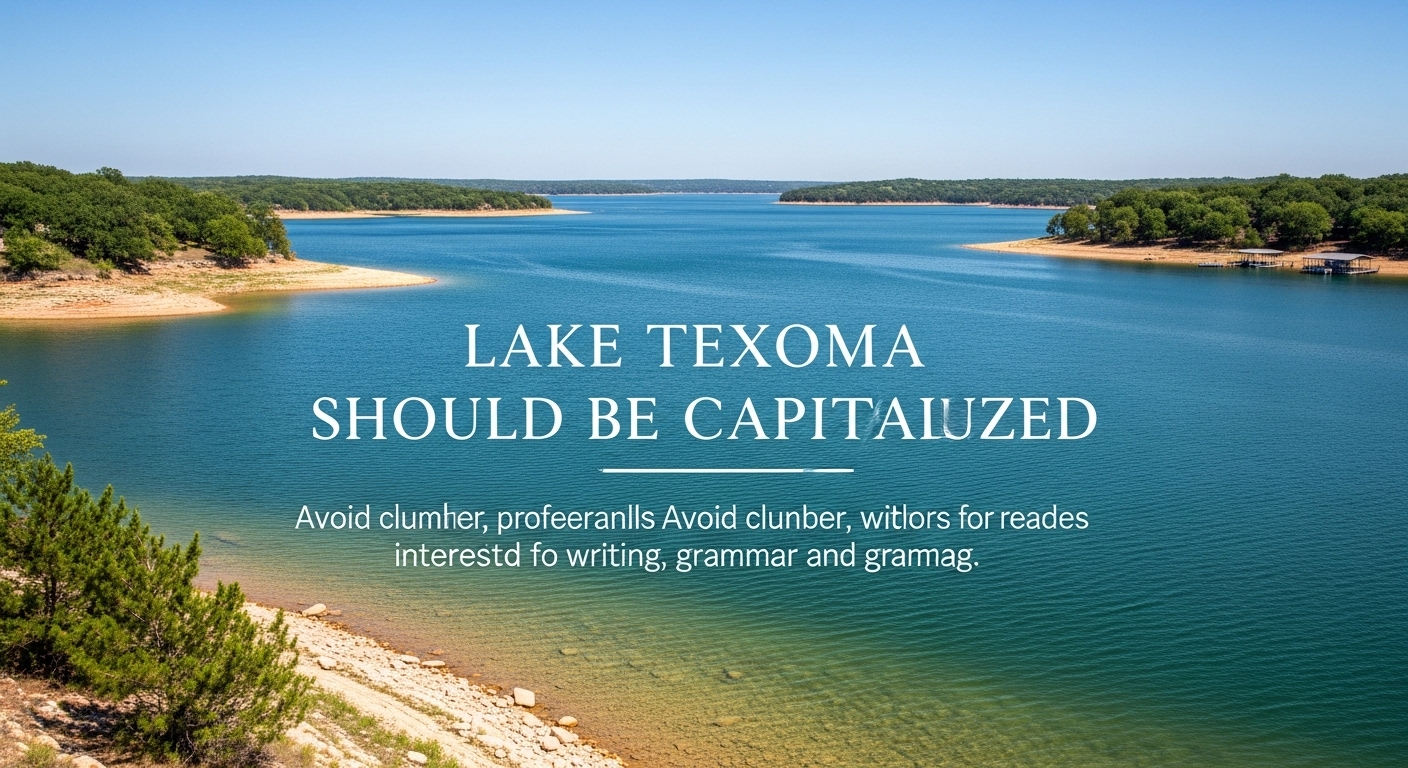
At first glance, the question “lake texoma should be capitalized” might seem trivial, even nitpicky. After all, readers usually understand what you mean whether you capitalize it or not. But in reality, capitalization is far more than a cosmetic detail. It affects clarity, credibility, search engine optimization, and even how professional your writing appears. Whether you are a student writing an essay, a blogger publishing travel content, a journalist drafting a report, or a business owner creating location-based pages, proper capitalization plays a surprisingly important role.
Lake Texoma is not just any lake. It is a well-known, named geographic feature that spans the Texas–Oklahoma border and holds historical, recreational, and cultural importance. Because of this, the way its name is written follows established grammar and style conventions. Understanding why Lake Texoma should be capitalized helps you avoid common writing mistakes while improving accuracy and authority in your content.
This article dives deeply into the rules, reasoning, and real-world implications behind capitalizing Lake Texoma. You will learn how grammar rules apply, how style guides interpret geographic names, and why correct capitalization matters in digital publishing. Along the way, you will also see practical examples, tables, and contextual explanations designed to make the topic clear and memorable.
Understanding Proper Nouns in the English Language
Proper nouns are one of the foundational elements of English grammar, yet they are frequently misunderstood or ignored. A proper noun is the specific name of a person, place, organization, or thing, and it is always capitalized. This rule exists to distinguish unique entities from general ones. For example, “city” is a common noun, while “New York City” is a proper noun. The capitalization signals specificity and importance.
When considering why Lake Texoma should be capitalized, it is essential to recognize that “Lake Texoma” functions as a single, unified proper noun. “Lake” in this context is not a generic body of water; it is part of the official name. Removing capitalization breaks the grammatical convention that identifies the phrase as a recognized place. Readers subconsciously rely on capitalization cues to interpret meaning, especially in longer or more complex texts.
Another important aspect is consistency. In professional writing, inconsistent capitalization can undermine credibility. If a writer capitalizes “Lake Texoma” in one paragraph but writes “lake texoma” in another, it creates confusion and signals carelessness. Over time, such inconsistencies reduce trust, especially in academic, journalistic, or commercial content. Understanding proper nouns is therefore not just about grammar rules; it is about communicating clearly and confidently with your audience.
Lake Texoma as a Named Geographic Location
Geographic locations follow specific naming conventions, particularly when they are officially recognized and widely used. Lake Texoma is a named reservoir created by Denison Dam on the Red River. Its name appears on maps, signage, tourism materials, and government documents. Because it is a formal name, it qualifies as a proper noun and must be capitalized in standard English writing.
The capitalization of geographic names serves a functional purpose. It helps distinguish official locations from descriptive phrases. For example, “the lake near my house” is descriptive and lowercase, while “Lake Texoma” identifies a precise location known to millions. This distinction becomes critical in travel writing, legal documents, and educational materials, where ambiguity can lead to misunderstandings.
Additionally, Lake Texoma’s name combines two proper elements: “Lake” as part of the official title and “Texoma,” a blend of Texas and Oklahoma. Together, they form a unique identifier. Writing it in lowercase strips away that identity and makes it look informal or incorrect. In any context where accuracy matters, such as publishing guides, reports, or location-based SEO content, capitalizing Lake Texoma is the correct and expected choice.
Grammar Rules That Apply to Lakes, Rivers, and Landmarks
English grammar treats the names of lakes, rivers, mountains, and landmarks as proper nouns when they refer to specific places. This means both the generic term (lake, river, mountain) and the specific name are capitalized when used together. Examples include Lake Superior, River Thames, and Mount Everest. Lake Texoma follows this exact same rule.
Confusion often arises because the word “lake” can function as either a common noun or part of a proper noun. When used generically, such as “the lake was calm,” it remains lowercase. When it becomes part of a name, as in “Lake Texoma,” it must be capitalized. Writers who are unaware of this distinction may incorrectly lowercase the term, especially in casual or online writing.
Understanding these grammar rules is especially important for consistency across different types of content. Whether you are drafting an academic paper, a travel blog, or marketing copy, following established capitalization rules ensures clarity. It also signals to readers that the content has been carefully prepared. This is one of the reasons grammar rules remain relevant even in an era of informal digital communication.
Why “Lake” Is Capitalized in Lake Texoma
One of the most common questions writers ask is why the word “Lake” itself is capitalized in the phrase “Lake Texoma.” The answer lies in its role within the name. In this case, “Lake” is not merely a descriptor but an integral part of the official name of the location. Removing capitalization suggests it is generic, which is inaccurate.
Capitalizing “Lake” helps preserve the identity of the place. It signals that you are referring to a specific, named body of water rather than lakes in general. This distinction becomes even more important when multiple lakes are discussed in the same piece of writing. Capitalization provides immediate clarity without requiring extra explanation.
From a stylistic perspective, capitalizing “Lake” also aligns with how maps, guidebooks, and official records present the name. Consistency across platforms reinforces recognition and avoids confusion. For writers aiming to produce polished, professional content, respecting this convention is a simple but effective way to improve quality.
Common Mistakes Writers Make With Geographic Capitalization
Despite clear grammar rules, capitalization errors are common, especially in digital writing. One frequent mistake is lowercasing proper nouns due to casual typing habits or reliance on autocorrect. Another issue arises when writers assume that only the unique part of a name should be capitalized, leading to incorrect forms like “lake Texoma.”
These mistakes can have subtle but meaningful consequences. Readers may not consciously notice the error, but they often perceive the content as less authoritative. In educational or professional settings, such errors can affect grades, credibility, or brand reputation. Over time, repeated mistakes weaken the overall impact of the writing.
Another common issue is inconsistency within the same document. A writer might capitalize Lake Texoma in headings but lowercase it in body text. This inconsistency disrupts readability and signals a lack of attention to detail. Recognizing these common pitfalls is the first step toward avoiding them and improving overall writing quality.
Capitalization and Academic Writing Standards
Academic writing places a strong emphasis on precision, clarity, and adherence to established conventions. In this context, capitalization errors are not minor oversights but genuine mistakes that can affect how a paper is evaluated. When referencing geographic locations like Lake Texoma, proper capitalization is expected and often required.
Scholarly readers rely on consistency and accuracy to assess the reliability of a text. Incorrect capitalization can distract from the argument or suggest that the writer lacks familiarity with formal writing standards. This is particularly important in disciplines such as geography, environmental science, and history, where place names are central to the subject matter.
In addition, academic style guides generally align on the capitalization of proper nouns, even if they differ in other formatting rules. Whether you are writing a research paper or a thesis, capitalizing Lake Texoma correctly demonstrates respect for linguistic norms and strengthens the overall presentation of your work.
Lake Texoma in Journalism and Media Writing
Journalism demands clarity, accuracy, and consistency. Place names are especially important because they provide context and credibility to news stories. When journalists write about events, tourism, or environmental issues related to Lake Texoma, capitalization is non-negotiable.
Media outlets often follow internal style guides that reinforce standard grammar rules. Incorrect capitalization may not change the facts of a story, but it can undermine the professionalism of the publication. Readers expect journalists to adhere to high standards, and even small errors can erode trust.
Moreover, headlines and captions frequently include place names. Since these elements are highly visible, mistakes stand out more prominently. Proper capitalization of Lake Texoma ensures that the content appears polished and reliable, reinforcing the authority of the media source.
SEO Implications of Capitalizing Lake Texoma
Search engine optimization is another area where capitalization plays a subtle but important role. While search engines are generally case-insensitive, users are not. Readers scanning search results tend to trust content that looks polished and grammatically correct. Capitalizing Lake Texoma properly contributes to that professional appearance.
In SEO-focused writing, consistency is key. Using the correct form of a place name throughout an article helps reinforce relevance and clarity. It also aligns with how authoritative sources typically present the name, which can indirectly influence user trust and engagement.
Occasionally, unrelated promotional phrases like discount ttweakflight or discount codes ttweakflight may appear in broader content ecosystems. Even in such mixed contexts, maintaining correct capitalization for place names ensures that your primary content remains credible and user-focused.
Digital Content, Blogs, and Informal Writing
Blogs and social media often encourage a relaxed tone, but that does not mean grammar should be ignored. Even in informal writing, proper capitalization helps convey professionalism and respect for the subject matter. Writing “lake texoma” in lowercase can make the content feel rushed or careless.
Digital readers are quick to judge content quality. If basic grammar rules are ignored, readers may question the accuracy of the information itself. Capitalizing Lake Texoma correctly signals that the writer has taken the time to ensure accuracy, even in a casual setting.
Balancing an approachable tone with grammatical correctness is one of the hallmarks of effective digital writing. Proper capitalization is a simple yet powerful way to achieve that balance without sacrificing readability or style.
Style Guides and Their View on Capitalization
Most widely used style guides agree on the capitalization of geographic names. While they may differ on punctuation, citations, or formatting, they consistently treat named locations as proper nouns. This consensus reinforces the rule that Lake Texoma should always be capitalized when referring to the specific place.
Style guides exist to promote consistency and clarity across publications. Writers who follow these guides demonstrate professionalism and attention to detail. Even when writing independently, aligning with established standards helps ensure that content meets reader expectations.
Understanding how style guides approach capitalization also empowers writers to make informed decisions. Instead of guessing or relying on habit, they can confidently apply rules that are widely accepted across industries.
Examples of Correct and Incorrect Usage
Seeing examples is often the most effective way to understand capitalization rules. Below is a table that illustrates correct and incorrect uses of Lake Texoma in different contexts:
| Usage Context | Correct Form | Incorrect Form |
|---|---|---|
| Travel article | Lake Texoma | lake texoma |
| Academic paper | Lake Texoma | Lake texoma |
| Casual blog post | Lake Texoma | lake Texoma |
These examples highlight how even small changes in capitalization can affect correctness. The incorrect forms may look minor, but they break established grammar conventions. Over time, repeated errors like these can weaken the overall quality of writing.
By consistently using the correct form, writers reinforce clarity and maintain professional standards across all types of content.
Capitalization Consistency in Long-Form Content
Long-form content presents unique challenges when it comes to consistency. Writers may inadvertently vary capitalization as they move through different sections of an article. This is especially common in pieces that exceed several thousand words.
Maintaining consistent capitalization of Lake Texoma throughout a long article ensures smooth readability. Readers should never have to pause and wonder whether two differently capitalized terms refer to the same place. Consistency eliminates that friction and allows the message to flow naturally.
For writers producing in-depth guides or SEO articles, consistency also supports authority. It shows that the content has been carefully edited and thoughtfully presented, which enhances reader trust and engagement.
Capitalization in Marketing and Business Content
Marketing and business writing often combines persuasive language with factual information. When referencing locations like Lake Texoma, accuracy is crucial. Capitalization errors can subtly undermine the professionalism of promotional materials, websites, and brochures.
Businesses that rely on location-based branding benefit from precise language. Correctly capitalizing Lake Texoma reinforces brand credibility and ensures that messaging aligns with customer expectations. This is particularly important in tourism, real estate, and hospitality industries.
Even when promotional content includes unrelated offers, such as a ttweakflight discount code from traveltweaks, maintaining grammatical accuracy in core content keeps the message focused and trustworthy.
Cultural and Regional Significance of Lake Texoma
Lake Texoma holds cultural and regional significance for communities in both Texas and Oklahoma. Its name represents more than a physical location; it symbolizes shared history, recreation, and regional identity. Capitalizing its name acknowledges that importance.
Names carry meaning, and proper capitalization shows respect for that meaning. Writing Lake Texoma correctly honors its status as a recognized landmark rather than reducing it to a generic reference. This is particularly important in cultural, historical, or community-focused writing.
When writers take care with capitalization, they contribute to preserving the integrity of place names and the stories associated with them.
Final Clarification: Should Lake Texoma Be Capitalized?
The answer to the question “lake texoma should be capitalized” is a clear and confident yes. As a named geographic location, Lake Texoma is a proper noun and must be capitalized in standard English writing. This rule applies across academic, journalistic, digital, and professional contexts.
Capitalization is not merely a stylistic choice but a reflection of grammatical accuracy and respect for established conventions. Writers who understand and apply this rule improve the clarity, credibility, and professionalism of their work.
By consistently capitalizing Lake Texoma, you ensure that your writing meets reader expectations and aligns with widely accepted standards.
Conclusion
Capitalization may seem like a small detail, but it carries significant weight in effective communication. The phrase Lake Texoma should be capitalized reflects a broader truth about how language works: names matter, and the way we write them shapes how our content is perceived. From grammar rules and academic standards to SEO and digital credibility, correct capitalization plays a vital role.
Whether you are crafting an essay, publishing a blog post, or creating business content, capitalizing Lake Texoma correctly demonstrates attention to detail and respect for linguistic norms. In a world overflowing with content, these small markers of quality can make a meaningful difference.
FAQs
Is Lake Texoma always capitalized in writing?
Yes, when referring to the specific lake, both “Lake” and “Texoma” should be capitalized.
Can I write lake texoma in casual content?
Even in casual writing, proper capitalization is recommended to maintain clarity and professionalism.
Why is “Lake” capitalized in Lake Texoma?
Because “Lake” is part of the official name, not a generic descriptor.
Does capitalization affect SEO rankings?
Search engines are case-insensitive, but readers trust content that looks professional and correct.
Is it acceptable to capitalize only Texoma?
No, both words form the proper noun and should be capitalized together.